


Soundbooth
Soundbooth Theater
I approached Soundbooth as an everyday audiobook and audio-story app rather than as a service I would open only when I had a long, uninterrupted evening. That distinction matters. The app is built for listening, but the real question is whether it can fit around commuting, chores, short breaks, and the many moments when reading with your eyes is inconvenient. My experience was strongest when I treated it as a repeatable listening habit instead of browsing randomly for something to play.
Soundbooth is a free entertainment app from Soundbooth Theater, with a Teen content rating. It has been available since late 2020 and currently runs at version 3.0.18 on devices using Android 8.0 or newer. Its audience is already fairly substantial, with over one hundred thousand installs, although the average rating sits at 2.8 from roughly six hundred ratings. That combination tells me to approach it with interest but not blind enthusiasm: there is a real audience, yet the experience clearly will not suit everyone.
How I built a practical listening routine
My baseline workflow was simple. I opened the app when I had enough attention to choose something, selected an audiobook or immersive audio story, and then used the player during a task that did not require constant screen interaction. This worked better than trying to make Soundbooth replace every other form of reading. I would not use it while doing anything that demanded concentration, but it fit naturally into cooking, folding laundry, walking, or settling down before sleep.
The first useful habit is to decide what kind of listening session I am starting before pressing play. A short break calls for something easy to pause and resume, while a longer walk is a better opportunity for a story that needs sustained attention. Immersive audio can be more demanding than a plain narration because voices, effects, and atmosphere may carry information that is easy to miss when I am distracted. I found that choosing by mood and available time made the app feel more dependable than simply opening it and scrolling until something looked interesting.
This is also where Soundbooth differs from a conventional audiobook player. A standard audiobook service is often optimized around a large catalog, familiar author searches, and a predictable narration format. Soundbooth’s identity is more closely tied to produced audio experiences. That can make listening feel more involving, but it also means I need to give the material more attention. If I want background speech that I can half-hear while working, a traditional audiobook may be the better choice.
Related News

Why WhatsApp Messenger Still Makes Everyday Communication Feel Easy

Jurassic World: The Game Is the Better Dino Tycoon for Strategic Players

Threads in Real Life: Who Should Join, Lurk, or Leave

How SHEIN Turned Shopping Into an Endless Content Feed

How to Make Fortnite Feel Smarter on Mobile

Should You Switch to Microsoft Outlook on Mobile?
I recommend trying the app first during a low-pressure session rather than committing to a long story immediately. Give yourself enough time to hear how the production works, how comfortable the player feels, and whether the style matches your habits. This is particularly important for people who normally listen at a very low volume or in noisy surroundings. Richer sound design can be enjoyable in a quiet room and less practical when outside traffic or conversation competes with it.
What the free starting point really means
The app itself is free to download and use, which makes experimenting relatively easy. However, in-app purchases range from $0.49 to $59.99 per item. I would therefore treat the free entry point as a chance to evaluate the catalog and listening style, not as a promise that every piece of content will remain free. Before making a purchase, I would check exactly what the item provides and whether it is something I am likely to finish.
That approach avoids one of the common mistakes with audio apps: buying several interesting titles during the first session and only later discovering that the format does not fit your routine. Soundbooth is best judged by the quality of the listening experience over several ordinary days. If I finish a sample or free selection and find myself planning the next session, that is a more useful signal than an attractive cover or a dramatic description.
Gallery
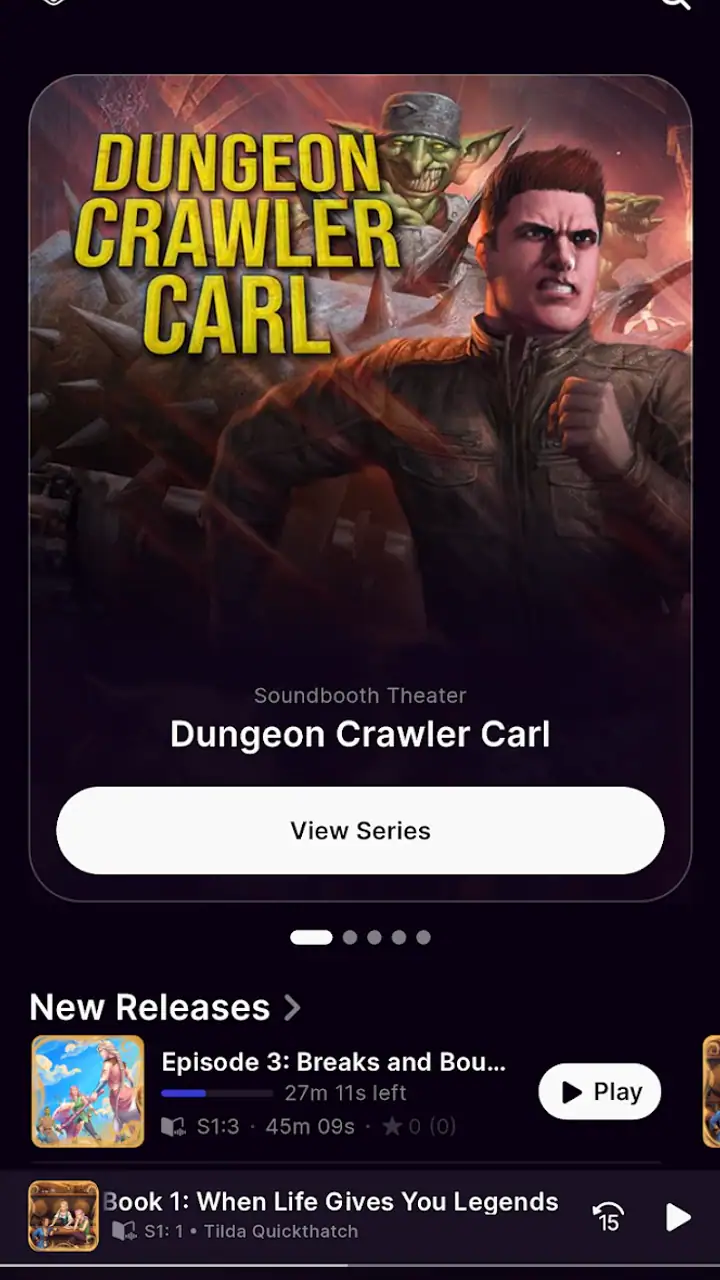
The Teen rating is another practical point for households. I would not assume that every story is suitable for younger children simply because the app is easy to install. Parents should review the individual content and decide whether the tone, themes, and intensity fit the listener. For adults and older teenagers, the rating is a straightforward reminder that this is entertainment with a broader range than a children’s bedtime player.
Settings and small habits that improve listening
I would begin with the device’s own audio controls before searching for complicated solutions inside the app. Comfortable volume is more important than making the production sound dramatic, especially during long sessions. If I am listening through headphones, I keep the level conservative and adjust the environment rather than continually increasing it. In a quiet room, subtle effects are easier to notice without pushing the volume too high.
Soundbooth is also easier to manage when I make pausing part of the routine. I pause before switching tasks instead of letting the story continue while my attention is elsewhere. This sounds obvious, but it prevents a surprisingly common problem: returning to the app and realizing that an important exchange or scene has passed. With immersive stories, losing a few minutes can be more confusing than missing a paragraph in a simple narration.
A useful workflow is to keep a consistent listening location for longer sessions. I used one place for focused listening and another for casual listening. The difference helped me recognize when I was actually ready to follow the story. It also reduced the temptation to start a new title simply because I was distracted. This is not a special feature of the app; it is a practical way to get more value from a format that rewards attention.
When I had trouble following a scene, I did not immediately conclude that the recording was poor. I first checked whether the room was noisy, whether my headphones were sitting correctly, and whether I was multitasking. Immersive audio can expose weaknesses in an unsuitable listening setup. A clear pair of headphones in a quiet environment may reveal details that disappear through a small speaker, while a phone speaker can still be useful for casual listening when privacy is not a concern.
Another worthwhile check is storage and connectivity planning. I would prepare before a flight, train ride, or area with unreliable service rather than assuming a story will always be ready at the exact moment I need it. The app’s usefulness on the move depends heavily on how well it fits the connection available to me. Since I do not want to spend a limited break troubleshooting playback, I prefer testing the intended listening situation at home first.
Making discovery less random
Browsing can be enjoyable, but it can also become the main activity if I do not set a limit. My preferred pattern is to choose a small group of possible titles, listen long enough to understand their tone, and then commit to one. This gives me a clear stopping point. It also makes comparisons fairer: a story designed around atmosphere may need more patience than a straightforward narration, so I avoid judging everything after only a few seconds.
I would also separate “something new” from “something reliable.” For a busy weekday, I choose a title I already know I can follow. At the weekend, I give myself room to explore. This two-track habit is especially helpful for people who become frustrated when an app offers many possibilities but no obvious next step. Soundbooth works better when I arrive with a listening purpose instead of expecting the catalog to make every decision for me.
For families or shared devices, I would be careful about leaving the app open at the last-played position. A different listener can unintentionally change the point in the story, which is annoying when several people are using the same phone. The safest routine is to pause deliberately and note where each person stopped. That is a small organizational detail, but it matters more with long-form audio than with short entertainment clips.
Faster patterns for people who listen often
Experienced listeners can make Soundbooth feel quicker without inventing a complicated system. I would place the app where it is easy to reach, keep headphones ready, and decide in advance which title belongs to which part of the day. The goal is to remove the small delays that cause a listening session to disappear. If I have to search, choose, adjust the room, and find headphones every time, I am less likely to listen consistently.
My most effective pattern was matching story intensity to the task. A familiar or less demanding production worked during repetitive chores. A more immersive piece belonged in a walk or a quiet evening when I could follow the details. This trade-off is easy to overlook. The app may offer a stronger experience when I pay attention, but that strength becomes a weakness if I choose a complex scene while answering messages or navigating a crowded street.
I also recommend using short sessions as a test rather than viewing them as incomplete listening. Ten or fifteen focused minutes can tell me whether the voices are comfortable, whether the sound design is distracting, and whether I want to continue. Short sessions are particularly useful before buying content. They reduce the risk of paying for an experience that looks appealing but does not work with my headphones, schedule, or concentration level.
For a realistic everyday scenario, imagine a person with a forty-minute evening cleanup. I would choose the story before starting, put the phone somewhere safe, and begin with the volume already set. If a visitor or phone call interrupts, I would pause immediately rather than rely on memory. Afterward, I would leave the title ready for the next session instead of browsing again. That sequence turns Soundbooth into a dependable part of the evening instead of another app demanding attention.
There is also a useful distinction between listening speed and listening clarity. Some audiobook apps encourage users to increase playback speed to finish more quickly. With an immersive production, speed is not always the best optimization because timing, pauses, and sound effects may contribute to the scene. I would prioritize understanding over completion time. If a story feels slow, I would first consider whether the pacing is intentional before trying to force it into the rhythm of a conventional spoken book.
People who use accessibility tools should test their preferred setup early. The combination of device audio, headphones, system controls, and the app’s player behavior determines whether the experience is comfortable. I would not wait until purchasing a long title to discover that the controls are awkward for my particular needs. A short trial session can answer practical questions about pausing, resuming, volume changes, and whether the screen needs to remain nearby.
Where the experience reaches its limits
The 2.8 average rating deserves attention without being treated as a complete verdict. Ratings can reflect different expectations: some people want a broad, frictionless audiobook library, while others are specifically looking for theatrical or immersive audio. My own view is that Soundbooth is easier to appreciate when I want produced storytelling. If my priority is the largest possible selection, familiar subscription mechanics, or a very plain reading experience, another audiobook platform may be a safer fit.
The app’s focus can also create a commitment problem. Immersive audio asks me to listen actively, but daily life often offers only fragmented attention. When I miss a scene, returning to the story may take more effort than simply resuming a narrator’s voice. This is not necessarily a flaw in the production; it is a mismatch between format and circumstance. I would skip Soundbooth for moments when I know I will be interrupted repeatedly.
Cost requires similar judgment. A free app with item purchases can be an excellent way to sample an experience, but the upper end of the purchase range is significant enough that I would slow down before buying. I would consider how often I listen, whether I finish long audio works, and whether I prefer owning individual productions or paying for access elsewhere. Someone who listens to several books every month may value a different pricing model, while an occasional listener may prefer selecting one carefully made production.
The Teen rating may also limit its usefulness as a universal household entertainment app. I would not hand the phone to a child and assume the entire catalog is appropriate. The app’s appeal is stronger for older listeners who enjoy performance, atmosphere, and stories that can occupy a longer stretch of attention. For young children, a dedicated children’s audio service with clearer parental organization would likely be more suitable.
Another limitation is that the experience depends on personal audio preferences. Some listeners love layered effects and multiple performance elements; others find them distracting and want a single voice with minimal production. Soundbooth is not the obvious choice for the second group. A traditional audiobook player may deliver better concentration because it keeps the soundscape simpler and makes it easier to listen while doing something else.
I would also avoid judging the app solely by whether it replaces a podcast player. Podcasts are usually built around shorter episodes and a familiar recurring format. Soundbooth is better suited to stories that I choose deliberately and revisit over time. If I want quick news, casual conversation, or an endless stream of short episodes, a podcast app will be more efficient. The comparison is useful because it clarifies that Soundbooth’s value comes from crafted audio storytelling, not from being a general-purpose audio feed.
Who should install it, and who should pass?
I would recommend trying Soundbooth to listeners who enjoy audiobooks but want more atmosphere than a standard narration usually provides. It is also worth considering for people who like theater, performed fiction, or audio that makes a quiet walk feel more absorbing. The free installation lowers the barrier to testing that style, and the Teen rating makes its intended audience clearer than a children’s audio application would.
I would be more cautious if you need a simple background player, have very limited listening time, or dislike sound effects. The same production choices that make a story memorable can become tiring when I am distracted or listening in a loud place. I would also steer heavy audiobook users toward comparing the purchase model with their existing service before spending. Soundbooth may complement a larger audiobook library better than it replaces one.
For users wondering whether a newer Android phone is required, the stated minimum is Android 8.0, so the app is not restricted to recent operating systems. That does not guarantee identical performance on every device, but it does make the compatibility requirement relatively approachable. I would still keep the app updated to the current version, 3.0.18, because audio applications benefit from receiving the latest available fixes and compatibility improvements.
For users asking whether it is genuinely free, the answer needs a little nuance. Downloading the app costs nothing, but individual in-app purchases can be made, with listed prices spanning from $0.49 to $59.99 per item. I would explore first, then buy only after confirming that a title suits my listening habits. That is the fairest way to evaluate the service without confusing free access with unlimited content.
For anyone asking whether the app is better than a normal audiobook service, I would answer: better for a particular kind of listener, not universally better. Soundbooth’s strongest case is immersive presentation and deliberate listening. The usual audiobook alternative wins when catalog size, predictable narration, background playback, or a familiar subscription arrangement matters more than theatrical sound.
Finally, if you are unsure whether you will follow an immersive story, start with a quiet, short session and avoid multitasking. Listen through headphones if possible, keep the volume comfortable, and pause whenever your attention breaks. That test tells you more than the store summary or the average rating because it measures the exact relationship between the app’s style and your own routine.
My verdict after settling into the format
Soundbooth is most convincing when I use it as a focused audio-story habit, not as a universal replacement for every audiobook and podcast app. Soundbooth Theater has created an entertainment app with a clear personality: it aims to make listening feel performed and immersive rather than merely spoken. That gives it a meaningful place for listeners who want atmosphere, but it also creates demands that a simpler narration does not.
I appreciate the free starting point, the compatibility with Android 8.0 and newer, and the fact that I can test the listening style before deciding whether paid content makes sense for me. I also value the way a repeatable routine improves the experience: choose by available attention, prepare the listening setup, pause deliberately, and match story complexity to the task. Those habits make the app feel more polished in daily use than casual browsing alone would suggest.
My reservations are equally clear. The average rating of 2.8 indicates that the experience has not satisfied everyone, and the purchase range means I would not buy impulsively. The Teen rating narrows its role for families, while the immersive format can be inconvenient when I need something that works as background noise. Listeners who prefer a massive conventional audiobook catalog or uncomplicated narration should compare alternatives first.
For me, the final decision comes down to attention. If I want to give a story a proper listening window and enjoy the extra texture of performed audio, I would keep Soundbooth available. If I am looking for a low-effort stream to fill silence while I do several other things, I would choose a more conventional audio service. Used on its own terms, this free entertainment app is worth trying; mastered through consistent habits, it can become a rewarding part of an audiobook routine, but it is not the right tool for every listener or every moment.
FAQs for Soundbooth
What is Soundbooth and what can you use it for?
Soundbooth is an audio-focused application designed for creating, editing, organizing, or enjoying sound content, depending on the tools available in its current version. Before downloading, it is worth checking the app’s store description because the name may refer to different products or services. In general, users should expect features related to recording, sound effects, audio playback, or basic production rather than a complete professional studio replacement.
Is Soundbooth free to download and use?
Soundbooth may be available as a free download, but some features can require in-app purchases, a subscription, or an account. The basic version may provide access to essential audio tools while reserving advanced effects, export options, storage, or premium content for paying users. We recommend reviewing the pricing section in Google Play or the App Store before downloading, especially if you plan to use the app regularly.
Does Soundbooth work on both Android and iPhone?
Compatibility depends on the specific Soundbooth application and the version published by its developer. Check the official Google Play or App Store listing to confirm whether your device is supported, along with the minimum operating-system requirements. Performance can also vary between phones and tablets, particularly when recording or processing high-quality audio, so newer devices may provide a smoother experience.
Does Soundbooth need microphone, storage, or other permissions?
An audio application commonly requests microphone access for recording, media or file access for importing and exporting sounds, and sometimes notification or network permissions for downloads and account features. These permissions should be reviewed carefully during setup. You can usually manage them later in your device settings. If you only want to play content, microphone access may not be necessary unless a recording feature is being used.
Is Soundbooth suitable for professional audio production?
Soundbooth can be useful for quick recordings, simple edits, sound experimentation, or mobile playback, but its suitability for professional production depends on the exact tools included in the app. Users who need multitrack editing, advanced mixing, precise automation, lossless export, or extensive plugin support may find mobile features limited. It is best viewed as a convenient portable solution unless the developer clearly provides professional-grade capabilities.
Pros
- Simple interface makes recording and editing easy for beginners.
- Supports quick voice capture for notes
- ideas
- and short recordings.
- Useful playback controls help review recordings efficiently.
- Lightweight design should work well on many Android and iOS devices.
- Convenient for creating basic audio clips without complex studio tools.
Cons
- Advanced mixing and mastering features may be limited.
- Long recordings can consume considerable storage space.
- Audio quality depends heavily on the device microphone.
- Export options may not satisfy users needing professional formats.
- Some features or tools may require an internet connection or paid access.


